Blog Posts | Articles | Papers
Blog Posts
Our country is facing a massive talent shortage.
Automation, artificial intelligence (AI) and other technologies are creating a digital economy that is disrupting industries where people have traditionally found good jobs, from office administration and agriculture to customer support and food service.
More than 60% of the world’s labor force is employed in occupations that could be partially displaced by automation and digital technologies by 2030[1]. The economic and social impact of the COVID-19 pandemic has further decreased demand for many customer-facing jobs. Research predicts that more than 10% of the total labor force in major economies will have to switch occupations in the next 10 years.
At the same time, we have seen increased demand for roles in healthcare and science, technology, engineering, and mathematics (STEM). As of January 2022, there were 10.9 million open jobs in the U.S. Between the increased demand for emerging tech jobs and open positions from the Great Resignation, companies are scrambling to fill jobs – and finding it difficult to attract qualified candidates.

The University of Chicago may have prepared Emmanuel “Manny” Roman for a career in finance, but his love of learning began at the dinner table with his father in their Paris apartment.
“My father was a deep intellectual,” says Manny. “He read voraciously – history, modern literature, philosophy. This was a strong influence on me, and reading became an important part of my life.”
Manny is still a voracious reader, and as CEO of PIMCO (the Newport Beach-based asset management firm with more than $2 trillion in assets under management), his intellectual curiosity and appreciation for diverse perspectives help shape how he leads.

“The world is becoming fast, fused and deep.”
This was Tom Friedman’s declaration on a recent virtual event with more than 140 executives – from both our CEO Leadership Alliance - Orange County and the Center for Higher Ambition Leadership community.
I’ve followed Tom for many years, read his books and have always admired his perspectives. As a columnist for the New York Times and a prolific author, Tom is an ever-curious learner. He writes about companies and leaders that are doing well and creating good in the world. Like our CLA-OC network, he is focused now on collective, collaborative work that drives local and regional progress.
Here are a few highlights from our hour-long conversation.

As Black Lives Matter protesters continue to march and communities take a hard look at the inequalities in our society, purposeful CEOs are taking action. Going beyond issuing statements of support, they are examining how they need to do more to address embedded system issues that don’t seem to get better over time, but in fact can grow worse.
Times of crisis put intense pressure on CEOs and leadership teams. How do we maintain business continuity? How do we support employees and their families? How do we reset expectations with investors when the future is uncertain? And how do we make tough calls on layoffs, closures, return to work and other critical decisions with a higher purpose in mind?
I am encouraged by the actions of many CEOs who are putting the safety and wellbeing of their employees and the larger world community ahead of short-term profits. This signals that they deeply understand the value of taking care of all stakeholders and that the decisions they make in the short-term for the greater good will ultimately benefit their companies in the long-term.

The August 19th Business Roundtable news sparked an enormous amount of press–181 CEOs of the Business Roundtable signed a new statement of purpose for the corporation. These CEOs committed to lead their companies for the benefit of all stakeholders–customers, employees, suppliers, communities and shareholders, not just owners alone.
This is a positive step. It was bold and unexpected. But it was considered lip service by many. And it was alarming to some.

If you listen to one commencement speech this year, I recommend Yo-Yo Ma’s address to Dartmouth graduates on June 9thin Hanover, NH. Drawing on his artistry and musical talents, he did not disappoint. And he had a clear call to action for graduates that is a good reminder to us all.

“My students are on fire.”
This from Rebecca Henderson, economist and professor with Harvard Business School. Henderson was referring to MBA students in her course, “Reimagining Capitalism.” Enrollment for the course has grown exponentially in recent years, as students search for a more purpose-driven and positive approach to business.

Wow. The college admissions scandal that broke into the headlines this week included several individuals who live right in my Laguna Beach neighborhood, or very nearby. I can’t stop thinking about these parents—many of them well-regarded pillars of their communities. At last count, 33 parents are being charged with racketeering, and they will likely serve prison time.
How could someone with an impeccable career, a vast accumulation of wealth, and nothing but a sunny horizon ahead, make such poor decisions as to bribe a coach or make a payoff to get their child into an elite school? It’s a terrible example these people have set for their kids, their employees, and their communities.

BlackRock CEO Larry Fink has spoken again, and this year he’s raising the bar.
A year ago, Fink wrote a letter to CEOs that sent shockwaves through the business community. Directed at those companies where BlackRock invests, Fink set out an imperative for companies to take a longer-term view of business value. Some responded skeptically to his challenge, while others struggled to find a path to that vision.
This year Fink gets more specific, advocating for practices BlackRock believes will drive sustainable, long-term growth and profitability. He is also looking for business to step up to some very real challenges.

As we begin 2019, I’ve been reflecting on what it means to be a purposeful leader. For the CEOs I work with, purpose and values inform both their personal approach to leadership and how they build higher performing organizations. These leaders are not only focused on the long-term success of their own companies – they are also working together to build a better world. It’s inspiring to talk to them about their vision of what business can be.
It’s easy to get caught up in our busy lives, but the new year is a good time to pause. Here I’ve outlined a set of questions that I hope will help you reflect on yourself, your company, and your community and get clear on what you want to accomplish this year.

Articulating an inspiring purpose statement is an important step in helping your purpose take hold. If done right, the purpose statement is known throughout the company and is foundational to the strategy. It is embedded in the DNA of the organization.
A stated purpose is a means to demonstrate your commitment to long-term value as well as short-term results. It sparks the innovation that will help you stay competitive in a rapidly changing marketplace. It ignites the passion in your people and engages your top talent, so they stay, grow, and thrive with you.
Yet purpose-driven organizations often struggle to translate their higher ambition aspirations into a concise purpose statement.

Starbucks shot into the headlines this past week following a Philadelphia store manager’s phone call to the police that led to the arrest of Rashon Nelson and Donte Robinson for trespassing. The two African American men were waiting to order until the colleague they were meeting arrived. The video of their removal by the officers went viral on social media (as of this week it had been viewed 11 million times) and prompted near-immediate demonstrations and boycotts.
Today, mission and values are integral to the culture and brand of many organizations. Many companies rely on this as a differentiator – a reason customers should come to them instead of competitors. This inevitably opens the door to higher expectations and increased scrutiny. Starbucks is definitely one of these companies.
In 2017 trust in America’s four key institutions: NGOs, business, government, and the media declined by 37%, the greatest collapse in the history of the Edelman Trust Index. Francis Fukuyama, in his seminal book, Trust: The Social Virtues and the Creation of Prosperity, demonstrates that social capital in any community or business is fueled by cultivating trust. When trust is in the room, people collaborate, give each other grace to make mistakes, and innovation springs forward.

Research shows that two people raised in the same circumstances can create completely different outcomes for how they end up in life. One, a failure who says, “If you came from my background, you’d be all messed up too.” The other who says, “Because of my background, I had to create a different future than what I grew up with.” Each person takes a completely different view of their circumstances, based on a mindset that they have developed over time. A thousand choices, made every day, shapes a life journey.
This is how we “craft destiny.” We shape our lives by drawing on the life narrative that resides in both our conscious and unconscious awareness. Becoming fully aware of the life we want to create is a process. It requires “unpacking” or “unfolding” of what really matters to us.
Trust me - it’s critical that you articulate your life narrative. A narrative is a story – it is your story – that continues to unfold every day. The story has a plot and you are the main character in how the plot unfolds and how the story ultimately ends – happy or sad. Speaking your story out loud, owning it, and then having it reinforced by others are key steps in building a conscious commitment to making it central to your everyday life.

In 2018 I plan to write a “Critical Issues” series for CEOs, boards, and senior teams. Drawing from current news events and the real, every-day challenges I work on with CEOs, I hope to spark discussion, debate, and action. In addition to my own writing, I’ll share and provide context around important articles from others.
Today I want to highlight a Harvard Business Review article on activist investors -- whether by hedge funds, corporate raiders, or family/private investors. The piece uses data and examples to illustrate the flaws in the model most investors have used for decades to measure shareholder value, and offers a new purpose oriented model. David Pyott, our own CEO from Orange County, who led Allergan through their takeover bid, is interviewed following the article.

All purpose-driven leaders have charities they are committed to and charitable works they do. It’s the right thing to do and a practice you naturally gravitate toward. But have you ever stepped back to consider the long-range impact of these efforts and the reach they can have over decades – even a hundred years?

In 1621 the Pilgrims celebrated their first Thanksgiving, offering thanks to their Creator for the blessings that helped them survive their first winter in the new world. When the pilgrims arrived on the Mayflower in November 1620, 102 people were on board. By the Fall of 1621, only 53 had survived, but of these 53 survivors, they took time out to give thanks.

In my reading, a number of recent articles have caught my attention. Here are several stories about companies and executives working to build high-performing companies and a better world.

A clear and compelling corporate purpose is meaningful and exciting. It inspires customers and partners to recognize that you are doing something unique and gets them out evangelizing for your brand. A compelling purpose also gives employees something to rally around and aspire to. Yet according to Gallup research, just four in 10 employees worldwide strongly agree that the mission or purpose of their company makes them feel their job is important. And less than half of workers in any industry feel strongly connected to their company's mission.
Most companies have some kind of statement of purpose. But are they doing the job they are supposed to do? Your purpose statement should fully define who you are as a company and why you exist. Your company may call its statement of purpose a mission or vision statement. Don’t get hung up on what you call your statement, but focus on what it says.

Twenty-two years ago this month, Jeff Bezos launched Amazon. Has the company been a success? The company clearly delivers on measures such as revenue, market share, and new product growth. Amazon has tremendous influence on shaping the way business works today – across every industry. Yet it has some serious shortcomings. If Amazon wants to be around to celebrate its 100th birthday, it must expand its definition of value.

Every morning, regardless of where I am in the world, I get up, make a cup of coffee, and just sit for a few minutes to reflect on the day ahead. I begin my daily ritual with an expression of gratitude, usually for my wife Karen, other members of our family, and for people I know and care about. I cultivate the mindset of abundance and thankfulness that carries me into the day with the feeling of “my cup runneth over.”
After simple reflection and quiet breathing with no pencil or cell phone in hand, I like to pick up a book of short readings. Recently I’ve been reading Wendell Barry, the poet who lives on a farm in Kentucky and left New York City to connect with nature and the earth. I’ve worked at memorizing his poem, The Peace of Wild Things.

The 2017 graduation season is just about to conclude. Graduation is one of those natural times to pause, reflect, and think about what matters most to you, what mark you want to make on the world. And it’s never too late to tread that path of thinking again. Those of us sitting as parents in the audience, or just watching the speeches online can take time and think about our own priorities. How far have we progressed in our personal journeys?
Looking across the many great commencement speeches this year, here are five that stood out to me.

Last month, the fast-fashion apparel company H&M released its 2016 sustainability report. The company set a commitment to use 100 percent recycled or other sustainably-sourced materials by 2030 and to become climate positive throughout its entire value chain by 2040.
While they aren’t the first company to make such a commitment, they are an example of the growing trend toward “closed loop” or “cradle to cradle” product development in fashion. (Learn more about this approach from my podcast interview with Bridgett Luther of Cradle to Cradle Products Innovation Institute.)
This is big shift for fashion companies that have made their money by coming out with new designer lines each season. Lower priced apparel manufacturers have a reputation for making lower quality, “disposable” clothing not built to last. H&M, in particular, has been criticized for this.

A CEO of a Fortune 500 company said to me recently, “If I could do it over again, I’d spend less time at my desk and a lot more time out of the office learning from others.”
I have worked closely with more than 75 CEOs in my consulting career, and what I hear more than anything else from experienced CEOs is this reflection. They wish they had spent more time outside – out learning from the larger business and community landscape around them – and less time consumed in the internal operations of their organizations.
Doing the same thing better, time after time, is ultimately a prescription for failure. Why? Because people outside your company will figure out a better way and beat you. We see it all the time, in every industry. CEOs and boards who believed they could maintain their market-leading position through incremental change. They often say, “No one saw it coming.” That is a rationalization. Those who are forward looking enough to plan for major change can transform their companies and create new value.
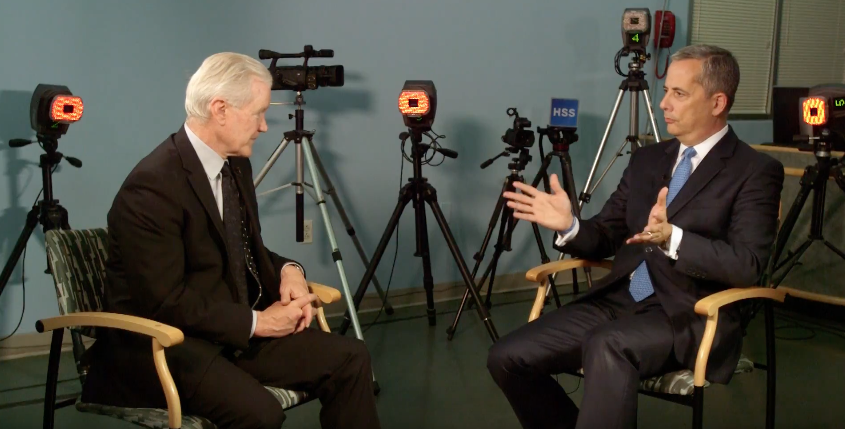
Lou Shapiro, CEO of Hospital for Special Surgery (HSS) in New York City, is definitely a forward-looking CEO. He understands innovation and the need to be a continual learner. HSS is the number one-rated hospital in the U.S. in orthopedic surgery. No one does it better! With all of their success, Lou still told me, “The riskiest thing we can do now is to try and stay the same.”

In my reading, I seek out stories about companies and executives working to build high-performing companies and a better world. Here I’ve curated recent articles that caught my attention.
Articles
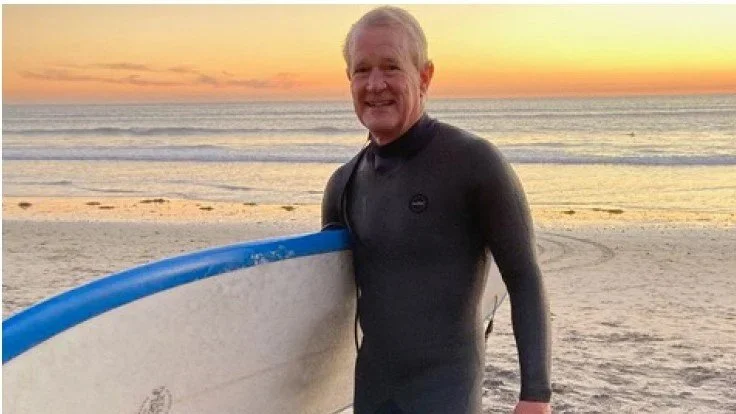
This piece by Ed Kaufman of the Laguna Beach Independent profiles Doug’s lifelong personal and professional journey that led him to his current role leading the National Talent Collaborative.

Establishing and operating from an anchor of a “living purpose” creates a distinct competitive advantage for companies and a mechanism to engage your stakeholders. For example, customers who are aligned with a company’s brand values deliver twice the share of wallet (47%) as customers who aren’t aligned with that same brand (23%) .
Articulating an inspiring, overarching purpose statement is an important first step in helping your purpose take hold. While it’s not enough on its own, it can be the connective tissue or jumping off point to clarify and integrate your organization’s values, cultural norms, and long-term strategy.

I am excited to share this article with you from strategy + business. Together with my co-authors, we outline the dramatic transformation of NYU Langone Medical Center during the past 10 years. Learn how Dean and CEO Robert Grossman, M.D., drove the organization's strategy forward, while also increasing employee engagement and ensuring excellent patient care. Any organization can take away lessons from this case study: how to create and go after a vision; how to use data to inform actions and create engagement; and how to upgrade and support talent during a transformation effort.




Papers
Articulating an inspiring purpose statement is an important step in helping your purpose take hold. If done right, the purpose statement is known throughout the company and is foundational to the strategy. It is embedded in the DNA of the organization.
A stated purpose is a means to demonstrate your commitment to long-term value as well as short-term results. It sparks the innovation that will help you stay competitive in a rapidly changing marketplace. It ignites the passion in your people and engages your top talent, so they stay, grow, and thrive with you.
Yet purpose-driven organizations often struggle to translate their higher ambition aspirations into a concise purpose statement.
Will your corporate purpose stand the test of time?
Medtronic is one of the leading medical technology companies in the world. Medtronic’s founders articulated a powerful mission statement way back in 1960. This mission has guided the organization’s actions ever since -- 60 years and counting! Their mission defined their corporate purpose and guides their strategy as a company.